Introduction
Pecans are one of the world's most distinctive tree nuts, valued for their rich, buttery flavor, naturally sweet taste, delicate texture, and impressive nutritional profile. Although pecans are particularly associated with the southern United States, their history, cultivation, and commercial importance extend across North America and other growing regions.
Scientifically known as Carya illinoinensis, the pecan tree belongs to the walnut family, Juglandaceae. Pecans are native to the southern United States and Mexico, where the species evolved in river valleys and other environments with suitable water availability. Today, commercial pecan production is concentrated primarily in the United States and Mexico, while pecans are increasingly traded and consumed in international markets.
Beyond their culinary appeal, pecans have attracted considerable scientific interest because they contain unsaturated fatty acids, dietary fiber, plant protein, minerals, vitamin E compounds, and numerous bioactive compounds. Recent randomized controlled trials have also investigated whether regular pecan consumption can positively influence blood lipids and other cardiometabolic markers.
For food companies, wholesalers, importers, retailers, and consumers, pecans are more than simply a premium snack. Their combination of taste, nutritional density, versatility, and premium positioning makes them an attractive product for the modern healthy-food market.
This comprehensive article explores the origin, botanical characteristics, nutritional composition, health benefits, varieties, processing, storage, culinary applications, commercial value, and quality considerations of pecans.
What Are Pecans?
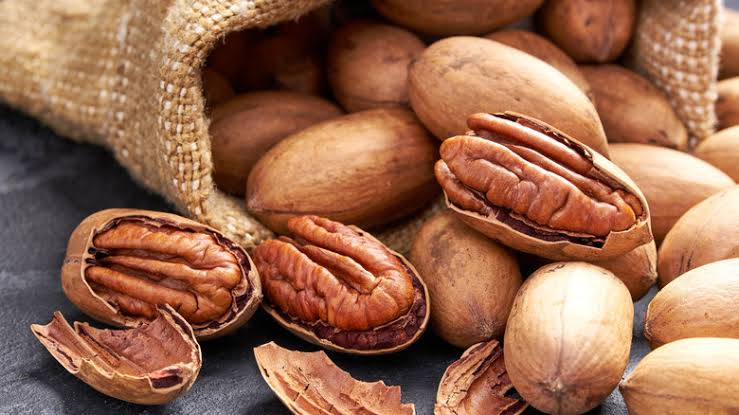
A pecan is the edible seed, or kernel, of the pecan tree, Carya illinoinensis. Botanically, the pecan is a drupe-like fruit containing a hard outer shell and an edible kernel inside.
Pecans are generally oval or elongated, with a relatively thin shell compared with some other tree nuts. Once shelled, the kernel has a characteristic golden-brown color and a soft, slightly oily texture. Its flavor is naturally sweet, rich, and buttery, which makes it particularly suitable for desserts, confectionery products, bakery applications, snacks, cereals, and premium nut mixes.
The pecan tree is a large, long-lived deciduous tree. Under suitable conditions, mature trees can become very large and productive. Commercial orchards often use improved cultivars selected for characteristics such as kernel quality, yield, disease resistance, harvest timing, and shell characteristics.
Pecan cultivation is strongly influenced by climate, soil conditions, irrigation, cultivar selection, and orchard management. Because the tree requires significant time to reach commercial productivity, pecan production is generally a long-term agricultural investment.
Where Do Pecans Come From?
Pecans are indigenous to the southern United States and Mexico. The tree naturally developed in areas where water and fertile soils supported its growth, particularly along river systems.
The United States has historically been the dominant force in global pecan production. Major U.S. producing states include Georgia, New Mexico, Texas, Arizona, and Oklahoma. USDA data for 2023 recorded approximately 441,000 bearing acres of pecans in the United States, with utilized production of approximately 271.45 million pounds on an in-shell basis.
Production can vary substantially from year to year. Pecan trees naturally exhibit an alternate-bearing tendency, meaning that a high-production year can sometimes be followed by a lower-production year. Weather events, drought, hurricanes, disease pressure, irrigation availability, and orchard management can also influence annual supply.
Georgia, New Mexico, and Texas are particularly important to the U.S. pecan industry. USDA Economic Research Service data indicates that five states—Georgia, Texas, New Mexico, Arizona, and Oklahoma—account for a large majority of U.S. pecan bearing acreage.
Mexico is also a major producer and an important participant in international pecan trade. The combination of U.S. and Mexican production makes North America central to the global pecan supply chain.
Pecan Nutrition: What Makes Pecans Special?
Pecans are energy-dense foods because they contain a relatively high proportion of fat. However, the nutritional significance of pecans is not simply their fat content; the type of fat and the overall combination of nutrients are particularly important.
Pecans contain predominantly unsaturated fatty acids, along with dietary fiber, plant protein, minerals, and antioxidant compounds. Their nutrient density makes them an attractive ingredient in diets emphasizing minimally processed, plant-based foods.
Healthy Fats
One of the most important nutritional characteristics of pecans is their high content of unsaturated fats.
Monounsaturated and polyunsaturated fatty acids are widely recognized as important components of a balanced diet. Replacing some sources of saturated fat with unsaturated fat can be beneficial for cardiovascular health.
This is one reason pecans are frequently included in heart-conscious dietary patterns and premium functional-food products.
Dietary Fiber
Pecans also provide dietary fiber. Fiber contributes to digestive health and can help increase satiety after meals.
For consumers looking for convenient foods that provide more nutritional value than highly processed snacks, a serving of nuts such as pecans can be an attractive option.
Protein and Minerals
Although pecans are not considered a high-protein food in the same way as legumes or some other nuts, they contribute plant-based protein to the diet.
They also provide minerals such as magnesium, phosphorus, zinc, copper, and manganese. These micronutrients participate in numerous physiological processes, including energy metabolism and normal cellular function.
Antioxidant Compounds
Pecans contain a range of bioactive compounds, including polyphenols and vitamin E-related compounds. Antioxidants help protect cells from oxidative damage caused by reactive molecules.
The antioxidant profile of pecans is one reason they are often discussed as a nutrient-dense tree nut rather than simply an energy-rich snack.
Health Benefits of Pecans
Scientific research into pecans has expanded considerably in recent years. It is important, however, to distinguish between potential health benefits supported by research and exaggerated health claims.
Pecans should be considered part of an overall healthy dietary pattern rather than a treatment for disease.
1. Pecans and Heart Health
The cardiovascular potential of pecans is one of the most studied areas of pecan nutrition.
A randomized controlled trial published in 2025 investigated the effects of replacing usual snacks with 57 grams of pecans per day for 12 weeks in adults at increased risk of cardiometabolic disease. Compared with the control group, the pecan group experienced reductions in total cholesterol, LDL cholesterol, non-HDL cholesterol, and triglycerides.
Another randomized controlled trial found that daily consumption of 57 grams of pecans improved several lipoprotein-related measures, including apolipoprotein B and atherogenic lipoprotein particle concentrations.
These findings are promising, but they should not be interpreted as evidence that pecans alone prevent or treat cardiovascular disease.
2. Pecans and Blood Lipids
Blood lipid management is particularly interesting because pecans provide a combination of unsaturated fatty acids, fiber, and bioactive compounds.
A 2026 randomized controlled trial examined different levels of pecan consumption in adults with excess body weight or dyslipidemia. The study found that moderate and higher pecan intakes—approximately 45.5 and 71 grams per day in the study groups—were associated with reductions in several fasting blood lipid measures compared with the control group.
This research adds to the growing evidence that incorporating pecans into a balanced diet may have favorable effects on certain lipid markers.
3. Antioxidant Support
Pecans contain various antioxidant compounds. Antioxidants are important because oxidative stress is involved in many biological processes.
However, marketing language should be used carefully. It is more scientifically accurate to say that pecans contain antioxidant compounds than to claim that eating pecans prevents specific diseases.
4. Digestive Health
The fiber found in pecans contributes to overall dietary fiber intake. Adequate dietary fiber supports normal digestive function and is an important component of a healthy diet.
Eating pecans alongside fruits, vegetables, whole grains, and legumes can contribute to a more diverse and fiber-rich dietary pattern.
5. Satiety and Healthy Snacking
Because pecans contain fat, fiber, and some protein, they can be more satisfying than many refined snack foods.
This makes pecans attractive for consumers searching for convenient snacks that combine flavor with nutritional value.
Nevertheless, pecans are calorie-dense. Portion size remains important, especially for people managing total energy intake.
Pecan Varieties and Commercial Quality
Not all pecans are identical. Commercial varieties differ in kernel size, shell characteristics, yield, harvest time, flavor, and suitability for different markets.
Some widely recognized pecan cultivars include Pawnee, Desirable, Stuart, Elliott, Kanza, Lakota, and Western Schley, among others.
The ideal variety depends on the intended market.
For example, premium retail markets may prioritize large, attractive whole kernels, while industrial processors may place greater emphasis on kernel yield, flavor, consistency, and price.
Whole Halves
Whole pecan halves are among the most commercially attractive forms. They are frequently used in premium snack packs, bakery products, confectionery, and decorative toppings.
Because appearance is important, whole halves generally require careful handling and processing.
Pieces
Pecan pieces are smaller fragments generated naturally during shelling or intentionally produced during processing.
They are often less expensive than whole halves and are particularly useful for bakery, cereal, granola, ice cream, chocolate, and food manufacturing.
Pecan Meal and Flour
Finely ground pecans can be used in baking and specialty food products. Pecan meal can add flavor, fat, and texture to cookies, cakes, pastries, and other formulations.
Shelled vs. In-Shell Pecans
Pecans are traded in both in-shell and shelled forms.
In-Shell Pecans
In-shell pecans retain their natural shell. They may have advantages in terms of protection from physical damage and can appeal to consumers who enjoy cracking nuts themselves.
However, they require additional processing by the final consumer.
Shelled Pecans
Shelled pecans are more convenient and are particularly suitable for food manufacturing, retail snack products, restaurants, bakeries, and international wholesale trade.
For commercial buyers, shelled pecans are commonly evaluated according to factors such as:
· Kernel size
· Whole-kernel percentage
· Color
· Moisture
· Flavor
· Foreign material
· Insect damage
· Shell fragments
· Rancidity
· Microbiological quality
· Packaging
· Origin
· Crop year
For premium applications, uniformity and visual appearance can significantly influence commercial value.
How Are Pecans Harvested and Processed?
Pecan harvesting generally takes place in the autumn and early winter, depending on the cultivar and growing region.
When mature, the outer husk separates and the nuts fall or are mechanically removed from the trees. Commercial operations use specialized equipment to collect, clean, separate, dry, grade, crack, and shell the nuts.
After harvest, moisture management becomes critical.
According to the University of Georgia Cooperative Extension, moisture and temperature are two major factors affecting pecan storage quality. The extension guidance recommends bringing small quantities of mature pecans to approximately 4.5% moisture as soon as practical after harvest.
Industrial processors may use mechanical drying systems to achieve appropriate moisture levels efficiently.
After drying, pecans can undergo cleaning, grading, shelling, sorting, inspection, and packaging.
Modern processing facilities may use optical sorting, mechanical grading, metal detection, and other quality-control technologies to improve consistency and food safety.
Proper Storage of Pecans
Storage is particularly important because pecans contain substantial amounts of oil. Like other high-fat nuts, they can develop rancid flavors when exposed to oxygen, heat, light, or unfavorable storage conditions.
Temperature has a major impact on shelf life.
University of Georgia extension information reports substantially longer storage life at colder temperatures, with approximate storage durations increasing from months at room temperature to much longer periods under refrigerated or frozen conditions.
For commercial storage, the most important principles include:
1. Keep moisture under control.
2. Avoid excessive temperatures.
3. Minimize exposure to oxygen.
4. Protect the product from direct light.
5. Use clean, food-grade packaging.
6. Prevent insect infestation.
7. Maintain good warehouse hygiene.
8. Monitor product quality throughout storage.
For shelled pecans, refrigerated or frozen storage can be especially useful for maintaining freshness over longer periods.
Culinary Uses of Pecans
Pecans are among the most versatile tree nuts in the food industry.
Their naturally sweet, buttery flavor works well in both sweet and savory products.
Pecan Pie
Pecan pie is perhaps the most famous pecan-based food. The combination of caramelized sweetness and rich pecans has made it a classic dessert, particularly in the southern United States.
Bakery Products
Pecans are widely used in cookies, cakes, muffins, brownies, pastries, bread, biscuits, and tarts.
Breakfast Foods
Pecan pieces can be incorporated into granola, cereals, oatmeal, yogurt, energy bars, and breakfast mixes.
Confectionery
Pecans are particularly valuable in chocolate and confectionery applications.
They can be combined with caramel, chocolate, honey, maple syrup, dried fruits, and other nuts to create premium products.
Savory Applications
Although commonly associated with desserts, pecans can also be used in savory recipes.
They can be added to salads, vegetable dishes, grain bowls, stuffing, sauces, and roasted vegetable preparations.
This versatility is an important commercial advantage because it allows pecans to be marketed across multiple food categories.
Pecans as a Premium Commercial Product
From a business perspective, pecans have several characteristics that make them attractive to wholesalers, importers, food manufacturers, and retailers.
First, they have strong consumer recognition in major markets.
Second, pecans are associated with premium bakery and confectionery products.
Third, their nutritional characteristics fit the growing consumer interest in healthier snacking.
Fourth, pecans can be sold in numerous formats, including raw, roasted, salted, flavored, chopped, halves, pieces, meal, and value-added snack mixes.
This creates opportunities for businesses throughout the supply chain.
A wholesaler, for example, may supply food manufacturers with bulk pecan pieces, while retail brands can use high-grade whole halves in premium consumer packaging.
Quality: What Should Buyers Look For?
For professional buyers, quality assessment should go beyond visual appearance.
A high-quality pecan should have a clean, characteristic flavor without rancid, moldy, bitter, or fermented notes.
Important purchasing specifications may include:
Origin: The producing country and region can influence cultivar, flavor, supply, and commercial positioning.
Crop year: Freshness and crop-year information can be important for buyers managing inventory.
Moisture: Excessive moisture can negatively affect storage stability.
Kernel color: Lighter kernels are often preferred for certain premium applications, although darker kernels may still be perfectly suitable for many industrial uses.
Whole-kernel percentage: Especially important for retail and premium bakery applications.
Foreign material: Should be controlled according to agreed specifications.
Insect and physical damage: Damaged kernels can reduce both appearance and commercial value.
Rancidity: Because pecans are rich in oil, rancid flavor is a major quality concern.
Packaging: Packaging should protect the product against moisture, oxygen, contamination, and physical damage.
Professional importers should establish clear specifications before purchasing, including tolerances for moisture, defects, broken kernels, foreign material, and other quality parameters.
Pecan Market and Global Trade
The pecan industry has considerable economic importance, particularly in the United States.
USDA data illustrates the scale of U.S. pecan production. In 2023, utilized U.S. pecan production was approximately 271.45 million pounds on an in-shell basis.
The industry is also exposed to agricultural risks. Weather can have a major effect on annual supply. USDA reported that the October 2024 forecast for U.S. pecan production was 270.9 million pounds, with Georgia's production forecast at 99 million pounds. USDA also noted that Hurricane Helene affected Georgia's pecan-growing region and that the full impact might not initially have been reflected in the forecast.
These fluctuations demonstrate why pecan prices and availability can vary from one crop year to another.
For international buyers, factors such as crop size, exchange rates, freight costs, processing capacity, tariffs, seasonal demand, and inventory levels can all influence landed prices.
Why Pecans Are Attractive for the Healthy Snack Market
The modern consumer increasingly wants food products that combine convenience, taste, and nutritional value.
Pecans fit this trend exceptionally well.
They can be positioned as:
· A premium natural snack
· A source of unsaturated fats
· A versatile baking ingredient
· A plant-based food
· A premium ingredient for granola and energy bars
· A component of luxury nut mixes
· A nutritious topping for yogurt and cereals
The key to successful marketing, however, is balance.
Consumers are increasingly interested in evidence-based nutrition. Therefore, brands that communicate the nutritional properties of pecans accurately and transparently can build greater credibility than brands that rely on exaggerated health claims.
Pecans vs. Other Tree Nuts
Pecans are sometimes compared with walnuts, almonds, cashews, pistachios, and hazelnuts.
Each nut has a distinct nutritional and sensory profile.
Almonds are widely recognized for their protein, fiber, and vitamin E content. Walnuts are particularly notable for their alpha-linolenic acid, an omega-3 fatty acid. Cashews have a softer texture and mild flavor, while pistachios are highly recognizable for their distinctive green-and-purple appearance.
Pecans stand out through their rich buttery texture, naturally sweet flavor, and strong suitability for premium bakery and confectionery products.
Rather than competing directly with every other nut, pecans can occupy a distinct premium position within the broader tree-nut category.
 English
 فارسی
 中文
